Gum Disease Treatment for Patients with Braces or Aligners


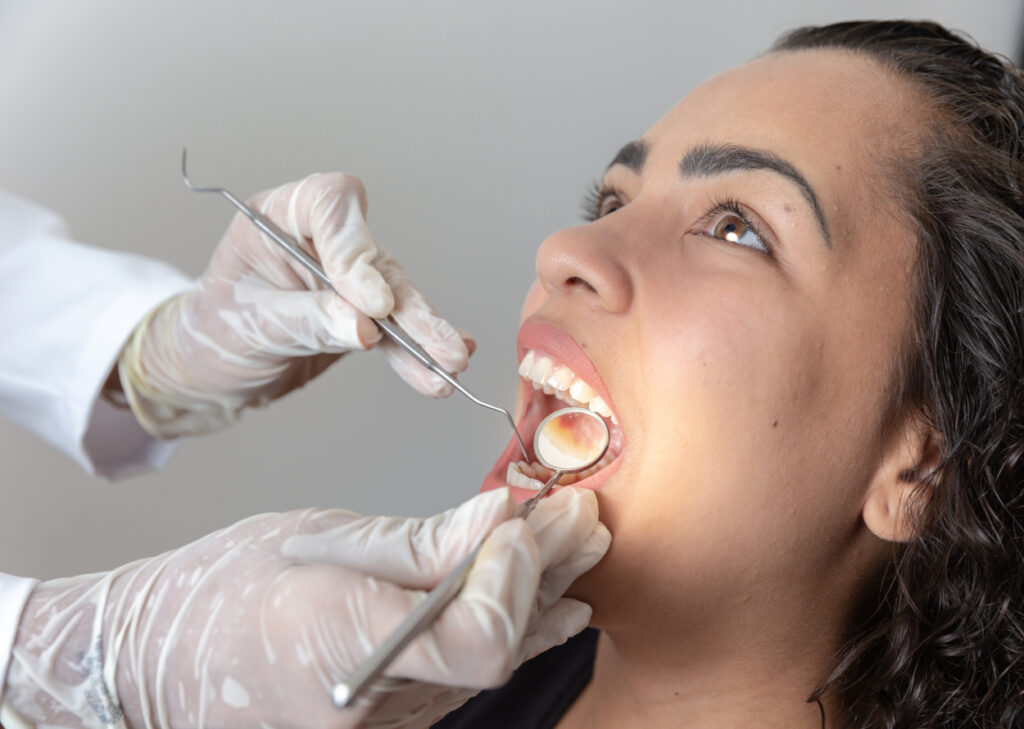
Orthodontic treatment is supposed to improve a smile, not complicate oral health. Yet braces and clear aligners can make gum problems easier to start and harder to manage. Plaque builds up in places that did not exist before. Food catches around brackets, wires, attachments, and tray edges. Cleaning takes longer, technique matters more, and small lapses add up fast.
That combination creates a very specific challenge. A patient may be motivated, may be brushing twice a day, and may still end up with inflamed gums because the mechanical obstacles are real. I have seen teenagers with spotless front teeth but swollen gum tissue between the brackets. I have seen adults in aligner treatment who assumed their trays were protecting their teeth, while trapped plaque and infrequent flossing quietly pushed them toward gingivitis. The problem is not lack of effort alone. It is that orthodontic appliances change the mouth's landscape, and the care plan has to change with it.
Gum Disease Treatment during orthodontic care works best when it is adapted, not delayed. If the gums are bleeding, puffy, tender, receding, or beginning to pull away from the teeth, the answer is not to wait until braces come off or aligner therapy is finished. The earlier the treatment starts, the easier it is to calm inflammation, prevent attachment loss, and keep the orthodontic plan on track.
Why gums become vulnerable during orthodontic treatment
Healthy gums depend on disruption of plaque every day. When that sticky biofilm sits undisturbed along the gumline, bacteria trigger an inflammatory response. In its early stage, that is gingivitis. Gums look redder, feel softer or more swollen, and bleed with brushing or flossing. If the inflammation progresses and affects the deeper supporting structures, it can move into periodontitis, where bone and connective tissue begin to break down.
Braces create retentive zones where plaque collects around bracket bases, under wires, around elastic ties, and near back molar bands. Even patients with excellent habits often miss the space just under the wire or the gumline behind the last bracket. Aligners present a different pattern. Because the trays fit tightly over teeth, they can hold acids and bacteria against enamel if a patient snacks frequently, sips sweet drinks, or puts trays back in without brushing. Attachments can also create edges where plaque clings.
Orthodontic movement itself adds another layer. Teeth are being guided through bone, which is normal and controlled when the tissues are healthy. But if the gums are already inflamed, the response becomes less predictable. Swollen tissue can make aligners fit poorly. Active gum infection around braces can increase discomfort and make cleaning even more difficult. In more advanced cases, untreated periodontal disease can compromise the stability needed for safe tooth movement.
There is also a behavioral reality that matters. People get tired. A teenager starts strong and six months later rushes through brushing before bed. An adult with a demanding job removes aligners for lunch, answers a call, then pops them back in without cleaning. These are ordinary mistakes, not dramatic neglect. Orthodontic treatment lasts long enough for ordinary mistakes to matter.
The early warning signs that should not be ignored
Patients with braces or aligners often assume some gum irritation is normal. Mild tenderness right after an adjustment can happen. What should not be dismissed is persistent bleeding, ongoing swelling, or a change in gum shape that lingers week after week.
A useful rule in practice is simple. Healthy gums usually do not bleed from routine brushing and flossing once technique is established. If bleeding continues beyond a few days of improved cleaning, something deserves attention. The same is true of bad breath that does not improve, gum tissue that looks shiny or enlarged, or recession that exposes more tooth near the root.
Here are the signs that deserve a closer look:
- Bleeding during brushing, flossing, or eating firm foods
- Puffy, red, or tender gums around brackets, attachments, or along the tray edge
- Persistent bad breath or a sour taste despite regular brushing
- Gum recession, tooth sensitivity near the root, or teeth that look longer
- Loose-feeling teeth or spaces that seem to appear suddenly
That last point can be tricky because orthodontic treatment intentionally moves teeth. Mobility can be part of tooth movement. The difference is context. If mobility comes with heavy inflammation, pain on biting, recession, or deep gum pockets, the gums and supporting bone need evaluation. That is not something to self-diagnose at home.
Gingivitis versus periodontitis during braces or aligners
Not every case of gum disease is severe, and that distinction matters because the treatment burden changes depending on the stage.
Gingivitis is reversible. The inflammation is confined to the gums, and there has not been permanent loss of supporting bone. This is the most common problem seen during orthodontic care. The gums bleed, look swollen, and may overgrow around brackets in a puffy collar. With proper cleaning, professional hygiene visits, and sometimes temporary modifications to the orthodontic routine, this can settle down well.
Periodontitis is more serious. In this stage, bacterial inflammation extends deeper, causing destruction of the connective tissue attachment and the bone around the teeth. That does not always cause obvious pain, which is one reason some adults are surprised when it is found. Periodontitis changes the risk profile of orthodontic treatment. Teeth can still be moved in some cases, but only under careful periodontal control and with coordinated planning.
A patient in active periodontal breakdown should not simply continue routine orthodontic adjustments as if nothing is happening. When the foundation is unstable, cosmetic alignment becomes secondary to preserving support.
How Gum Disease Treatment changes when braces are involved
Traditional Gum Disease Treatment usually starts with controlling plaque and calculus above and below the gumline. For orthodontic patients, the fundamentals remain the same, but access is more difficult and maintenance demands are higher.
With braces, professional cleaning often takes longer because the hygienist has to work around wires and brackets. Stain and hardened deposits tend to build around bracket edges and between the gumline and the appliance. Sometimes enlarged gum tissue partially covers the bracket, making it even harder to clean. In those cases, reducing inflammation is the first win, because once the tissue shrinks to a healthier contour, home care improves.
If the problem is gingivitis, the treatment may involve a thorough prophylaxis or periodontal maintenance visit, personalized brushing and flossing instruction, and a shorter interval before the next cleaning. Instead of the standard six-month recall, many orthodontic patients benefit from cleanings every three to four months while appliances are on. That is not overkill. It is often the difference between manageable inflammation and a cycle of recurring swelling.
If deeper pockets are present, scaling and root planing may be recommended. This deeper cleaning targets bacterial deposits beneath the gumline and smooths root surfaces so tissues can heal more effectively. When braces are present, the clinician may stage the treatment by area, especially if the mouth is very tender or access is limited. Follow-up is essential, because pocket reduction and bleeding control determine whether the treatment is working.
In some cases, the orthodontist may need to pause certain tooth movements until the periodontal condition stabilizes. Patients do not love hearing that, but it is https://zanderwbzq558.lowescouponn.com/the-role-of-deep-cleaning-in-gum-disease-treatment a sound clinical decision. Moving teeth through inflamed tissues can worsen an already fragile situation.
The aligner patient’s version of the same problem
Clear aligners are often marketed as the cleaner, easier alternative to fixed braces, and in many ways they are. You can remove them to brush and floss properly. There are no wires trapping food after every meal. Professional cleanings are simpler. But that advantage only exists if the trays are removed and the mouth is cleaned consistently.
The common failure pattern with aligners is not obvious messiness. It is repetition of small shortcuts. Coffee with trays in. A quick snack followed by reinsertion without brushing. Skipping floss because the teeth "feel clean." Wearing trays for the right number of hours but not cleaning the trays themselves. The result can be generalized gum inflammation, especially along the margins where plaque is repeatedly sealed in.
Some aligner patients also experience mechanical irritation if tray edges are rough or if attachments create tiny plaque traps. Usually that can be adjusted easily, but it should not be confused with simple trauma if bleeding is widespread. The mouth can have both irritation and gingivitis at the same time.
The good news is that Gum Disease Treatment for aligner patients is often straightforward once habits improve. Remove trays for all food and anything except plain water. Brush before reinsertion whenever possible. If brushing is not immediately available, rinsing thoroughly is better than nothing, but it is not the long-term standard. Trays should also be cleaned daily, because a cloudy, biofilm-coated aligner is essentially a reusable plaque reservoir.
What treatment may look like in a real dental office
Patients often imagine gum treatment as one dramatic procedure. More often, it is a sequence of decisions based on what the tissues do over time.
A typical patient with braces and moderate gingivitis might come in with bleeding around most brackets, puffy papillae between the teeth, and visible plaque at the gumline. The first visit may involve detailed photographs, periodontal charting, a professional cleaning, and very targeted home-care coaching. Two weeks later, the difference can be striking if the routine improved. Bleeding falls, swelling recedes, and the patient can finally thread floss more effectively under the wire because the tissue is less inflamed.
A more advanced case may involve an adult with aligners, 5 to 6 mm pockets in selected areas, recession on lower front teeth, and a history of missed maintenance visits. That patient may need scaling and root planing, re-evaluation of pocket depths, and coordination between the general dentist, periodontist, and orthodontist. Sometimes aligner treatment continues with closer monitoring. Sometimes refinement trays are delayed until the periodontal status is stable. It depends on the pattern of disease and the patient’s consistency with home care.
There is also the occasional situation where appliances themselves contribute to the problem enough that modifications are considered. Excess composite around an attachment, a loose band irritating the gum, or a bracket placed so close to inflamed tissue that hygiene becomes nearly impossible can all be factors. Good clinicians look beyond "you need to brush better" and ask whether the hardware, the instruction, and the schedule are all helping or hurting.
Home care that actually works when appliances are in the way
Orthodontic patients do not need perfection. They need repeatable habits that hold up on weekdays, during travel, and after a long day when motivation is low. Fancy tools are useful only if they are realistic for the person using them.
The essentials are simple, though technique matters:
- Brush along the gumline, not just across the brackets or tray attachments
- Clean between the teeth every day, using floss threaders, orthodontic floss, or another aid that the patient will actually use
- Use an interdental brush around brackets and under wires where a regular brush misses
- Clean aligners separately and never wear them after meals without at least rinsing, ideally brushing
- Keep periodontal maintenance visits on a shorter interval if inflammation tends to return
That third point is one of the most helpful practical upgrades for braces. A small interdental brush can reach under the archwire and around bracket wings in seconds. Patients often say, after finally trying one, that it cleans the spots they always suspected they were missing. For aligner patients, the equivalent practical upgrade is keeping a travel brush and floss in a bag, desk drawer, or car. Convenience changes compliance more than enthusiasm does.
Mouthwash can help, but it is not a substitute for mechanical cleaning. An antimicrobial rinse may reduce bacterial load for some patients, especially during periods of acute inflammation. A fluoride rinse may help with cavity prevention during orthodontic treatment. But if plaque is sitting under a wire or between two teeth, rinsing over it is not enough.
When more advanced periodontal care is needed
Some orthodontic patients need more than cleaning and coaching. If pockets remain deep, bleeding persists, or recession worsens, referral to a periodontist is often the right move. That is not a sign of failure. It is a way to protect the long-term result.
A periodontist may evaluate whether there is significant attachment loss, whether specific teeth are at greater risk, and whether surgical therapy is necessary. In some cases, localized flap procedures are used to gain access for deep cleaning. In others, grafting may be considered if recession is pronounced and the anatomy is thin. Adults with crowded lower front teeth often have delicate gum architecture in that area, and orthodontic movement without close periodontal oversight can expose that weakness.
There are also patients whose gums enlarge so much around braces that the tissue itself becomes a plaque trap. If this overgrowth does not resolve after inflammation is controlled, a gingivectomy or recontouring procedure may be discussed. This is not routine for everyone, but it can make a meaningful difference in both hygiene and appearance.
The important principle is that orthodontic treatment and periodontal treatment should not operate in separate silos. Teeth can be straight and still poorly supported. The best result is not just aligned enamel. It is stable, healthy tissue around aligned teeth.
Timing matters more than people expect
One of the biggest mistakes patients make is waiting until "after braces" to deal with bleeding gums. That delay can turn a very manageable problem into a more expensive and complex one. Gingivitis can escalate over months. Calculus becomes harder to remove. Recession becomes harder to reverse. If bone loss begins, no one gets that support back simply by removing the appliances.
Early intervention is usually less invasive. It may mean one longer cleaning, a few weeks of focused hygiene, and a shorter maintenance interval. Late intervention may mean deep scaling, possible surgical care, changes to the orthodontic timeline, and a higher risk of relapse later.
This is especially important for adults returning to orthodontics after years away from regular dental care. Many adults start braces or aligners because they finally have the means or motivation to fix crowding, spacing, or bite issues. That is excellent, but they also bring adult periodontal risk factors to the table. Past smoking, diabetes, dry mouth from medications, clenching, previous bone loss, and old restorations all influence how the gums respond.
Special situations that deserve extra caution
Pregnancy can intensify gum inflammation, and that response can be more pronounced around braces because plaque retention is already higher. The same amount of plaque can produce a bigger tissue response. Patients in this situation often benefit from more frequent professional care and very gentle but thorough home cleaning.
Diabetes is another major factor. Poorly controlled blood sugar can worsen periodontal inflammation and slow healing. If a patient with braces or aligners has recurrent gum problems despite reasonable hygiene, medical factors should be part of the conversation.
Teenagers present their own challenges, mainly because routine is inconsistent. Their gums can become impressively swollen around braces even when the problem is still reversible. A short, direct intervention often works best: show the missed areas, simplify the tools, and set a specific review date. Long lectures rarely change brushing behavior. Concrete feedback does.
Adults with a history of recession are a different group. Some enter aligner therapy with already thin gum tissue on lower incisors or canines. In these patients, any sign of inflammation or worsening recession deserves prompt evaluation. The issue may not be classic generalized gum disease, but the treatment still requires periodontal judgment.
Protecting the result after orthodontic treatment ends
The end of braces or aligners is not the end of gum risk. In fact, there is often a deceptive phase right after appliance removal when the teeth feel so much easier to clean that patients relax too soon. This is also when retainers enter the picture, and retainers can create their own plaque habits if they are not cleaned well.
If gum tissues were inflamed during treatment, the period after debonding is a chance to reset. A careful cleaning, reassessment of pocket depths, and updated home-care routine help establish a healthier baseline. For patients who had periodontitis during treatment, supportive periodontal maintenance remains essential even after alignment is complete.
Straight teeth are easier to keep clean than crowded teeth, which is one of orthodontics' long-term oral health benefits. But that benefit is only realized if the patient transitions into a sustainable maintenance routine. Without that, the same inflammation can return, only now without the obvious excuse of brackets and wires.
The practical bottom line
Patients with braces or aligners are not doomed to gum disease, but they do need a more deliberate strategy. The appliance changes where plaque hides, how long cleaning takes, and how quickly mild inflammation can snowball. Gum Disease Treatment in this setting is less about dramatic rescue and more about early recognition, targeted professional care, and habits that fit real life.
If the gums bleed regularly, look swollen, or seem to be receding, it is worth addressing right away. Most cases improve substantially when the cause is identified early and the cleaning routine is adapted to the appliance. When deeper disease is present, coordinated care between the dentist, hygienist, orthodontist, and periodontist protects both the bite correction and the supporting tissues.
The best orthodontic outcome is not just straight teeth in photos. It is a mouth that looks better, functions better, and stays healthy years after the trays and brackets are gone.
Avra Dental
Address: 1708 S Victoria Ave B, Ventura, CA 93003
Phone number: +18057653206
FAQ About Gum Disease Treatment
Can I make my gums healthy again?
Yes, you can make early-stage gum disease completely healthy again, but advanced damage requires professional care to manage.
Can you cure gum disease?
You can cure early-stage gum disease, but advanced gum disease cannot be fully cured.
Can I live a normal life with gum disease?
Yes, you can live a normal life with gum disease, but it requires active, lifelong management to control the condition and prevent serious complications